Through membership of XLVets Equine, the practice is able to offer our clients access to XLVets’ database of equine specific factsheets. Below, you will find their complete list of factsheets ordered in alpahabetical order with PDF downloads available for all.
The factsheets are intended for ‘further reading’ and if you are concerned about your horse, we recommend to call us on 01908 560789 or send us an online enquiry.
Where possible in an equine patient, investigation and treatment is carried out under sedation or local anaesthesia, but general anaesthesia is necessary in order to carry out certain procedures painlessly, safely and effectively. Some short operations can be undertaken in a stable or field but many types of surgery require hospital or clinic facilities.
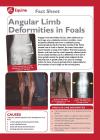
Angular limb deformities (ALDs), often referred to as bent legs, are a relatively common condition, most frequently affecting new born or relatively young, growing foals during the first few months of life. When viewed from in front or behind, the lower limbs either divert towards or away from midline. The knee (carpus), fetlock, and hock are the most frequently affected joints. ALDs usually develop due to a difference in the rate of bone growth across the growth plate adjacent to the affected joint. A growth plate is an area of cartilage within the bone of young animals that is responsible for the increase in bone length as the animal grows.
Antibiotics are pharmaceutical products which kill or prevent the replication of bacteria. Veterinary surgeons use them in equine practice for the treatment of bacterial disease. Antibiotics are broadly classified into two categories – they are either bacteriostatic, whereby they inhibit bacteria from growing, allowing the animal’s own immune system to deal with them, or bacteriocidal, where the antibiotic itself kills the bacteria. Bacteria can also be classified as either Gram positive or Gram negative depending on how they appear when stained and examined under a microscope. Different antibiotics are good at targeting different bacteria. Those with the widest range of activity are known as broad spectrum antibiotics.
Arthritis is a disorder of the joints, characterised by the degeneration and loss of the cartilage covering the joint surface and the development of new bone on joint surfaces and margins. It can follow after an injury or may develop during the course of your horse’s life, as a result of general wear and tear. Arthritis results in pain, and is thought to be one of the most common causes of lameness in the horse. If your horse is lame we would advise you to schedule an appointment with your veterinary surgeon to determine the cause of lameness.
Arthroscopy (commonly known as keyhole surgery) has been available since the 1980s for the treatment of joint injuries in humans, horses and occasionally dogs. The procedure allows the examination and treatment of many joint and tendon canal injuries whilst causing minimal trauma during the procedure itself. Patients generally recover relatively quickly following keyhole surgery with little scarring and low risks of wound complications.
Atypical or sycamore myopathy is an uncommon, sudden onset, severe muscle disease, which is rapidly fatal in about 75% of cases. This disease is seen most commonly in the autumn, in horses and ponies kept at pasture and is associated with the ingestion of sycamore seeds. It should not be confused with exertional rhabdomyolysis (ERM) commonly known as tying up which is a relatively common muscle condition occurring during or shortly after exercise.